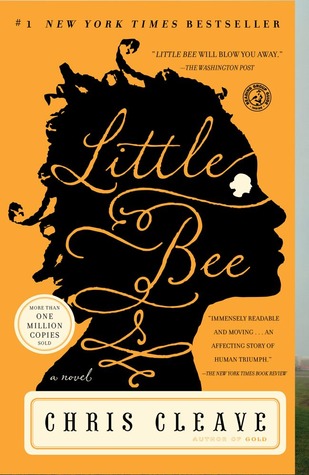
Description:
Britain is proud of its tradition of providing a safe haven for people fleeting persecution and conflict.
--from Life in the United Kingdom: A Journey to Citizenship (UK Home Office, 2005)
Sarah and her husband Andrew are both English journalists who first meet Little Bee while on a Nigerian beach. Sarah was offered other vacation destinations from her workplace, but she wanted to go somewhere unique and decided on Nigeria. After Sarah’s affair with her married coworker Lawrence, Sarah and Andrew’s marriage was suffering and the vacation was meant to be the first step in fixing their issues.
Sarah and Andrew stay at a guarded hotel and go against the guard’s advice and take a walk on the beach alone. The guard catches up with them and tells them they must leave; moments later Little Bee (14) and her sister Nkurika (16) are running towards the three of them. They tell them that they are running from the bad men who have burned down their village, killed their parents, and now want to kill them, but Andrew and Sarah do not take them seriously because they cannot comprehend the idea that someone would want to kill children. The men did not intend for any witnesses to be left alive. The bad men reach the group and Andrew and Sarah’s guard tries to intervene but is instantly shot. The leader of the bad guys tells Andrew that the British have always put their middle finger up to their people and if he cuts off his middle finger, one of the girls will be saved. Andrew refuses to do it, so Sarah grabs the machete from him and cuts her own finger off. The leader is astounded and says she has saved Little Bee’s life, but takes both of the girls and disappears with them in the woods. Andrew and Sarah are free to go and do not expect to see either girl ever again.
After hearing her sister Nkurika brutally raped and murdered by the bad guys, Little Bee is able to escape by hiding in the cargo hold of a ship bound for England. Upon arriving, she is caught by the authorities and taken to the immigration detention center. She spends two years there before she is illegally released; a Jamaican refugee, Yevette, had been trading sexual favors with a detention officer in exchange for an early release. In order not to look suspicious, the guard releases several other detainees, Little Bee being one of them. Back in Nigeria, Little Bee had found Andrew’s license on the beach and kept it. When released from the immigration detention center, she receives the license with the rest of her belongings and decides to go to the address on Andrew’s ID.
Little Bee hides in Andrew and Sarah’s garden for days before she is first found by Andrew who believes he is hallucinating her. When she touches him to prove she is real, he shouts at her to get out and locks himself in his office. After some silence, Little Bee enters the room to find Andrew standing on a chair with an electrical cord around his neck. He admits he has realized the person he is—the person on the beach who could not save a young girl's life—and steps off the chair. Little Bee is afraid to call the authorities because she risks being deported, so she leaves for a few days and comes back to the house looking for Sarah, instead.
Little Bee ‘arrives’ at Sarah’s home the day of Andrew’s funeral and Sarah takes her in. Little Bee attends the funeral with Sarah and her four-year-old son Charlie, who refuses to wear anything but a Batman costume. Little Bee agrees to help care for the grieving Sarah and Charlie in exchange for a place to stay.
While staying with Sarah, Little Bee is introduced to Lawrence, who demands Sarah turn her in because she is technically an illegal immigrant. Little Bee threatens to tell Lawrence’s wife and children about his affair if he reports her, so he tolerates her. Lawrence strongly feels that Little Bee is selfish for putting Sarah in the position she has and attempts to guilt Little Bee into leaving on her own. Because Little Bee has nowhere else to go, she continues to stay with Sarah.
One afternoon, Little Bee, Sarah, Lawrence, and Charlie take a trip into London. While Sarah is on the phone with a work call, Charlie wanders off and Sarah, Little Bee, and Lawrence cannot find him. Little Bee is forced to call the police and while being questioned about the events, Little Bee’s illegal status is discovered and she is scheduled to be deported back to Nigeria. Little Bee is fearful of this because she knows that if she is found in Nigeria, she will be killed for witnessing her village being burned down.
As Little Bee is sitting on the plan about to take-off, Sarah and Charlie come down the aisle and ask to take the seats next to her. Sarah has decided that she wants to help Little Bee and write a book about the refugees from Nigeria. Although it is dangerous to do so, Sarah recruits Little Bee to help find Nigerians who have been affected by the militarization of the Niger Delta during the oil conflicts.
Once the three of them have made it back to Nigeria, while spending a nice day on the beach they see soldiers running toward them. Sarah knows they are coming after her because she has been recruiting oppressed Nigerians to tell their stories. She instructs Little Bee to walk away and blend in with the other people on the beach, if she is seen with the only white woman and child on the beach, they will know she was the one helping her with the project. Little Bee attempts to blend in with another group of people on the beach, but once the soldiers approach Sarah, Charlie runs away in his Batman costume and the soldiers begin to shoot in his direction. Little Bee screams to them that she is the one they want, and begs them to stop shooting. Little Bee realizes she must get Charlie to take off his batman costume to reveal his skin color to the soldiers so will stop shooting. She reveals her real name to him, Udo, so he will comply with her. The book ends with Little Bee watching Charlie, who has finally taken his batman costume off, run on the beach as she is being captured by the soldiers.
Obstacles:
Little Bee is a very heavy text; it deals with serious issues such as rape, suicide, racism, and murder and also controversial topics such as sex and illegal immigration. There are some instances of curse words including "shit", "fuck", and "bastard." This book would be ideal for a progressive school that does not stress censorship of language and controversial topics. I think many students would be excited to read a book that is contemporary and expands beyond the horizons of life in their own country, but some students may be offended by the novel. This is not a text I would try to introduce to a conservative school. Some parents and administrators may be concerned about the mature content. If more than one student and/or parent were concerned about the book, I would attempt to use it as an optional text in a unit: students would be given a list of books to choose from, this text being one of them.
Rationale:
I chose this text because of the discussion it invokes and because it allows the reader to experience the same story from two different perspectives. This text would be most appropriate for a mature junior or senior class. The text itself is somewhat complex, but juniors and seniors who are reading at grade level should not have much difficulty reading it.
In my opinion, it is a disservice to prohibit teens from reading these kinds of stories. Little Bee mirrors events happening to real teens all over the world. If a 14 or 16-year-old girl can experience this, why can’t a 16-year-old American student read about it in a literature course? If we don’t teach our students about what is happening outside of our classrooms, our states, or even our country, we’re not doing all that we can to prepare them for the world they will be living in on their own someday.
Teaching Ideas:
I would prefer to use group discussions to teach most of this book as I think it is important for students to get an array of ideas and perceptions from their classmates. The book is all about seeing one world from multiple lenses, so I feel that discussion would be the most fitting for getting a handle on the book. There are some individual assignments that could be completed to show the teacher individual understanding of the work and encourage individuals to form their own opinions about the reading and discussions.
Group Work:
Character Analysis and Compare: Little Bee is told through two narrators: Sarah and Little Bee. Although the two women come from vastly different backgrounds, they are connected through one traumatic event. Throughout the novel, the reader is exposed to both Sarah and Little Bee’s thoughts on the world around them. I would like to have students analyze each of the characters and work toward unveiling any similarities between the two women.
Foreshadowing: In the text, the reader is not given the whole story in chronological order. The story begins with Little Bee in the immigration detention center, then through Sarah and Little Bee’s dialogue and reflections of the past, the incident on the beach is slowly revealed. The reader also may only be exposed to one characters perception of a going-on at times, giving the reader the opportunity to make predictions about what will happen next and how the other character will tell the story.
Discussion Questions: There is a set of eleven reading questions at the end of the book that helps the reader to better understand each character. Some of these I would include in discussion groups for reading so that students can be exposed to a variety of perceptions of the text from their peers.
Individual Work:
Connections to Informational Text: Although this story is fictional, it is based around events that actually took place in Nigeria. When Sarah, Andrew, and Little Bee meet, the oil conflict in the Niger Delta is at its peak. Potential topics students could research include: the Niger Delta oil conflict, Nigerians seeking refuge during the time of conflict, the importance of names in Nigerian culture, English immigration detention centers, etc. The purpose of this assignment would be to supplement the students’ comprehension of the book by providing factual background information.
Contemporary Connections: This book is set in 2005-2007, over a decade ago. I would like students to look into what is going on in the world around them and find connections to current events over the world.