Wednesday, December 7, 2016

ENGL493 Learning Letter

This quarter has been one of the most challenging and busy quarters of my college career, but now that it is over I am glad that I decided to take this class. I feel much more prepared for future education classes, applying for MIT programs, and eventually completing the edTPA.
            This quarter was the first time I had ever even heard of the edTPA, so creating the lesson plans for my mini-lesson and unit plan turned out to be a challenge. I spent at least two hours working on the first lesson plan I created this quarter and was blown away by how much thought needs to go into each one. I am glad I had the opportunity to present my mini-lesson though because it was the first time I went into a presentation with the mindset of a teacher. Instead of focusing on proving my own knowledge to my audience, I had to ensure that they were understanding what I was teaching. It was less about jamming in as much content as possible and more about assessing my audience’s—or students’—knowledge. The mini lesson also forced me to consider ways to make my teaching engaging; I have always struggled with that part of presentations, but I found myself looking into different ways I could keep students interested in the lesson. I landed on using the Kahoot quiz for my formative assessment because it can assess the students’ learning in a game-like way.
            The unit-plan was by far the most time-consuming project I have ever completed during my college career, but after finishing it, I am glad that I did it. My unit-plan went through several revisions because of how much consideration had to go into CCSS, time constraints, effective assessments, and selecting the best texts to support my unit objectives. The first few lesson plans took me a ridiculous amount of time to finish because I did not know what I was doing when I began them, but after getting through the first week of lesson plans, I was able to bust the remaining ones out in 30-40 minutes each. They became easier as I got into the mindset of considering CCSSs, assessment, and lesson connections throughout the entirety of my planning.
            I liked having the opportunity to listen to my classmates’ book talks and learn about new books and ways to implement old and new books into lessons. After I had chosen my text, I realized I probably wouldn’t be able to teach it in most secondary schools. While I would love to be able to, there were too many inappropriate parts in it. This assignment forced me to think about how I can teach sensitive subjects, such as the ones that appear in Little Bee, in a way that would be allowed in a secondary school.
            I found the readings in this class to be very helpful. While I liked all of the theory articles we read, I enjoyed the article “Discussion as a way of Teaching” the most  because it gave suggestions for how to properly use discussion in the classroom in a way that benefits all students, not just the ones that feel comfortable speaking in front of the class. I have found that I learn most from seminar classes and I think they are the most useful for teaching English. This reading provided me with strategies for facilitating that classroom environment effectively.
            Both Kelly Gallagher’s Readicide and Cris Tovani’s I Read It, But I Don’t Get It have given me a lot to think about as a future English teacher. Both of them discussed a spectrum of literacy issues from struggles individual students face to issues that have affected our country as a whole. When I read Gallagher’s book, I felt it acted as call to action more than anything. After reading it, I wanted to figure out ways that I could ensure my future students wouldn’t become victims of ‘readicide.’ Tovani’s book provided a lot of strategies for helping students improve their reading comprehension, many of which I want to implement into my own classroom someday.
            My participation in this course has helped me gain confidence in myself as a future teacher; it helped me change my mindset from “how can I be a good student?” to “how can I be a good teacher?” I found myself using strategies learned from you, the readings, and my classmates to help me in my other classes this quarter. This class also made me think about teaching English in terms of helping students meet standards, not simply teaching the content. That was the hardest change for me because I wanted to be able to spend more time teaching literature rather than using literature to supplement progression toward CCSS. The most important thing I have gained from this class is my constant questioning of “Why am I doing this?” while making lessons. I have begun thinking more about the relevance of everything I want to do as a teacher, something I now realize that I did not put enough consideration into before this class. This class has given me a lot to think about as a future teacher and helped me to discover who I want to be as a future teacher.

Sunday, November 27, 2016

Fall of the House of Usher Lesson Plan

TPA Lesson Plan

1. Teacher Candidate
Grace Knowles
Date Taught
11/28/2016
2. Subject
English Language Arts
Field Supervisor
Dr. Sean Agriss
3. Lesson Title/Focus
Plot Within Fall of the House of Usher
5. Length of Lesson
30 minutes
4. Grade Level
9th

6. Academic & Content Standards (Common Core/National)
CCSS.ELA-LITERACY.RL.9-10.10
By the end of grade 9, read and comprehend literature, including stories, dramas, and poems, in the grades 9-10 text complexity band proficiently, with scaffolding as needed at the high end of the range.
7. Learning Objective(s)
·         Students will be able to define the elements of plot (exposition, rising action, climax, and falling action).
This objective aligns with CCSS.ELA-LITERACY.RL.9-10.10
·         Students will be able to make a plot pyramid for “The Fall of the House of Usher” with written and visual representations of each element
This objective aligns with CCSS.ELA-LITERACY.RL.9-10.10
8. Academic Language
demands (vocabulary, function, syntax, discourse)
Content Vocabulary
Exposition, Rising Action, Climax, Falling Action, Resolution

Process Vocabulary
Snowballing Discussion: Discussion starts in pairs and slowly progresses to add more people, eventually involving the whole class.
Kahoot: An online quiz format that projects questions for the class and has students respond to the questions using their phones or computers.

9. Assessment
·         Student learning will be measured through a Kahoot quiz that will ask them the definitions of the content vocabulary (exposition, rising action, climax, falling action, and conflict) and quiz their knowledge of applying it to the reading, The Fall of the House of Usher.
·         This is assessment is formative.
·         The lesson will be an introduction to creating plot pyramids, so I will be using the assessment to determine where the students are at in their understanding and what kind of additional instruction or review will be necessary.
·         The lesson is intended to help students improve their reading comprehension skills. In order to become better readers, students need to understand what they are reading. Plot pyramids allow students to think about the story they have read and its structure, thus allowing for increased comprehension.
**Attach** all assessment tools for this lesson

10. Lesson Connections
·         This lesson is supported by Cris Tovani in her pedagogical book I Read It, But I Don’t Get It. Although Tovani does not include plot pyramids in her book, she recommends many strategies for ensuring students aren’t fake reading (reading the words without extracting meaning). Creating plot pyramids is a way for students to think about what they have read, make sense of it, and ensure they are understanding it correctly through discussion and application.
·         Students are building onto their prior learning of exposition, rising action, climax, falling action, resolution, and what a plot pyramid is. They will not only be asked to define each of the terms, but apply them to Poe’s short story.
·         This lesson is building onto a prior lesson on what plot, exposition, rising action, climax, falling action, and resolution are.
·         In order to fully access this lesson, students must have a basic understanding of how to use the internet on smartphones or laptops.
·         I am building my lesson on the recognition that many teens use technology on a daily basis. I want to provide ways in which they can incorporate that technology into their education. SmartPhones and laptops are not merely forms of entertainment, but also educational assets.


11. Instructional Strategies/Learning Tasks to Support Learning
Sequenced Instruction
·         Introduce SLOs, use of technology, pre-assignment assessment, review plot pyramid, and break class into groups ~4 minutes
·         Learning activities ~14 minutes                                            
·         Kahoot quiz ~10 minutes
·         Exit question and review~ 2 minutes

Teacher’s Role
·         Teacher will orally introduce SLOs, review content vocabulary discussed in the prior lesson, and give a preview of the lesson.
·         Teacher will inform students that they will need their phones or computer later in class and ask them to ensure they are on and connected to the internet.
·         Teacher will group students into pairs and assign them one element of plot to present to the class--students will still be responsible for finding each of the elements of plot within the story.
·         The teacher will encourage students to use their technology as an aid if they believe it will help.
·         Teacher will circulate the class to ensure that students are on task and offer help as needed.
·         Teacher will instruct the class to come back together and present their findings to the class.
·         Teacher will wrap up discussion.
·         Teacher will introduce Kahoot, help students get logged into it, and begin quiz
·         Teacher will use assessment results to plan for further instruction on the content.
·         Teacher will ask the students why they think learning about plot is essential for students to expand their reading skills.
·         Teacher will inform students of next lesson—creating visual representation of the plot pyramid—so that they can begin thinking about it.
·         Teacher will dismiss the class.
Students’ Role
·         Students will come into class and listen to the  teacher for first few minutes of class to receive instructions.
·         Students will be grouped by the teacher and instructed to determine where the elements of plot are found in the story. Students will be informed which one they need to present to the class.
·         The teacher will show an example of a plot pyramid so students know how to structure them.
·         Students will work together to determine what part of the story contains the exposition, rising action, climax, falling action, and resolution.
·         A designated speaker from each group will announce their results to the class.
·         The class will discuss each group's result and mention any possible issues with answers.
·         Students will be instructed to get their phones or laptops out, go to Kahoot.it, and type in the quiz code.
·         Students will take the Kahoot quiz on plot, and the teacher will review any wrong answers before moving on.
·         After the quiz, students will be asked why they think learning about plot is essential to expanding their reading skills.
·         Students will be informed that they will be creating visual representations in their upcoming lesson.
·         Students will be dismissed from class.
Student Voice
Student voice can be gathered from the Kahoot quiz and mini-presentations in class. Before class, I will ask the students to hold up 1-4 fingers (1 meaning unconfident, 4 meaning extremely confident) to determine their confidence in their understanding of plot. The final question on Kahoot will ask the same question to assess progress toward student’s confidence in understanding plot (aligning with CCSS.ELA-LITERACY.RL.9-10.10). At the end of the class, I will ask the students why they think understanding plot is essential for improving their reading skills.

 
12. Differentiated Instruction
·         While working on the plot pyramid assignment, students with enough time will have the option to begin drawing visual representations of their plot pyramid.
·         This lesson will be part of a unit plan. In the following lesson, students would have more time to work on visuals for their plot pyramids.
·         If any students do not have access to the required technology, the quiz can be changed to a partner or group quiz. This will allow students to discuss the questions to work toward the appropriate answer and hopefully take less time for the teacher to need to go over incorrect answers.

13. Resources and Materials
·         This lesson was inspired by an observation of a 9th-grade class at Ferris High School. All worksheets and slides for this lesson were designed on my own with influence from Patricia Schulze’s “Teaching Plot Structure Through Short Stories” unit plan on ReadWriteThink.org.
·         The teacher will need a computer, a projector and screen, and a white board.
·         Students will need a smartphone or computer, the plot pyramid worksheet, a pen, and a copy of “The Fall of the House of Usher.

Schulze, Patricia. "Teaching Plot Structure Through Short Stories." ReadWriteThink. N.p., n.d. Web. 27 Nov. 2016.
Tovani, Cris. I Read It, But I Don't Get It. Portland: Stenhouse, 2000. Print.

14. Management and Safety Issues
The biggest issue that could arise from this lesson is the abuse of technology. In order to prevent it, I will make clear expectations of time allowed for each portion and suggest ways in which they can use technology effectively to supplement the lesson.

15. Parent & Community Connections
Students will be encouraged to demonstrate their new understanding of plot to inform their parents of what they are working on in class. Students will be encouraged to summarize The Fall of the House of Usher to their parents ensuring they cover exposition, rising action, climax, falling action, and resolution in the proper order. This allows students to gain a better understanding of plot through explanation while filling parents in on what is going on in the classroom.
Being familiar with the elements of plot can help them to better succinctly summarize other pieces of literature, videos, and conversations. They can use the skills gained in this lesson to become better communicators outside of the classroom.


LINK TO NON-PRINT MATERIALS: https://docs.google.com/presentation/d/1kRlafLrs_gABoa0Ce7Oj1nB9rp3K3F_PnnFYyaSAv3I/edit?usp=sharing

Sunday, November 20, 2016

Graphic Canon, Russ Kick

            When I first began looking through the Graphic Canon, I assumed it was geared toward elementary or middle school students. After I noticed all of the nudity in the illustrations, I realized it was not something I would be able to keep on the shelf for younger students. Initially, I did not think the Graphic Canon was something I would want to use for high school students, but I was able to find a way to incorporate it into my twelfth-grade unit plan on satire.
                One week of my unit plan is spent reading Part II of Gulliver’s Travels and I was able to find the same part in the Graphic Canon. The only way I could think of using the graphic novel in class was to help meet CCSS.ELA-LITERACY.RL.11-12.7 (Analyze multiple interpretations of a story, drama, or poem evaluating how each version interprets the source text). For that lesson, the students will have already have read all of Gulliver’s Travels and class time will be utilized watching clips from two movie interpretations of the same scene and reading the Graphic Canon version of the scene. The students will complete a handout asking them “How do the different adaptions of the story Gulliver’s Travels change the effect of the story? Write your notes and observations below.” Essentially, the Graphic Canon would provide the same purpose as a movie would for supplementing reading.

                Another way I could have students use Graphic Canon is to help acquire background information quickly. Some texts are better understood when the reader has read other texts that are referenced in it, and the Graphic Canon is a quick and fun way to get young readers caught up enough. I would prefer not to use The Graphic Canon on its own unless absolutely necessary because I don’t think the book shows great interpretations of every story, but I think it could help some students supplement their understanding of the original text versions.

Wednesday, November 16, 2016

Night, Elie Wiesel

            Night is a book I haven’t read since middle school and in rereading it this week I was reminded how powerful it is. It is one thing to read or hear about the facts of the holocaust in a history class, but reading Wiesel’s account humanizes the experience in a way that blunt facts cannot. It brings his (and millions of others) experience to a level the reader can really connect with. Night is a book I would without a doubt teach someday. It is so important for students to read and know about historical atrocities such as the holocaust. I think the quote “history repeats itself because nobody was listening the first time” really applies here. Reading books like Night evokes empathy from us as readers and reminds us how stripped of humanity we become when we let things like religion, race, sexuality, or nationality divide us.
                Night is a short, easy read that students could easily read in-class or on their own in under a week. I think it could be used in any classroom from grades 6-12 given the ease of the text; the Lexile score is only 570 which roughly amounts to a 3rd or 4th- grade reading level. I would be most interested in teaching this book to high school students though, as they would have more maturity and hopefully more ability to connect with the text. I think students get the most value from this text when they can empathize with Wiesel and the other characters enduring the horror of concentration camps and certain death. An assignment I would ask juniors or seniors to complete is a character journal. They would take on the role of any character other than Elie and write a journal about one of their experiences during any portion of the novel, outlining their observations and feelings. Students could take on the role of either of Elie’s parents, his sisters, Moshe, a veteran in the concentration camps, etc. This assignment would force students to use evidence from the text to articulate an underdeveloped character in the story. It would also give them a chance to practice writing skills while trying to put themselves into the shoes of someone in a situation they will likely never have to endure. I can foresee things going wrong if an immature student jokingly takes on the role of a Nazi, so this is an assignment I would have to have a read on my class for or make very clear guidelines about what is inappropriate.
                Night is such a powerful text that has the ability to reach a broad audience, I think it’s important to teach it, or similar books, to our students. There is so much that can be done with it; not only can we use it to help our students work toward CCSS’, but we can also use it to help them better understand humanity and empathy.


Monday, November 14, 2016

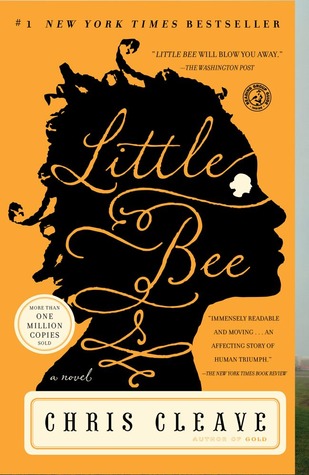
Book Talk: Little Bee, Chris Cleave


Image result for little bee chris cleave

Description:
Britain is proud of its tradition of providing a safe haven for people fleeting persecution and conflict.
--from Life in the United Kingdom: A Journey to Citizenship (UK Home Office, 2005)

                Sarah and her husband Andrew are both English journalists who first meet Little Bee while on a Nigerian beach. Sarah was offered other vacation destinations from her workplace, but she wanted to go somewhere unique and decided on Nigeria. After Sarah’s affair with her married coworker Lawrence, Sarah and Andrew’s marriage was suffering and the vacation was meant to be the first step in fixing their issues.
                Sarah and Andrew stay at a guarded hotel and go against the guard’s advice and take a walk on the beach alone. The guard catches up with them and tells them they must leave; moments later Little Bee (14) and her sister Nkurika (16) are running towards the three of them. They tell them that they are running from the bad men who have burned down their village, killed their parents, and now want to kill them, but Andrew and Sarah do not take them seriously because they cannot comprehend the idea that someone would want to kill children. The men did not intend for any witnesses to be left alive. The bad men reach the group and Andrew and Sarah’s guard tries to intervene but is instantly shot. The leader of the bad guys tells Andrew that the British have always put their middle finger up to their people and if he cuts off his middle finger, one of the girls will be saved. Andrew refuses to do it, so Sarah grabs the machete from him and cuts her own finger off. The leader is astounded and says she has saved Little Bee’s life, but takes both of the girls and disappears with them in the woods. Andrew and Sarah are free to go and do not expect to see either girl ever again. 
                After hearing her sister Nkurika brutally raped and murdered by the bad guys, Little Bee is able to escape by hiding in the cargo hold of a ship bound for England. Upon arriving, she is caught by the authorities and taken to the immigration detention center. She spends two years there before she is illegally released; a Jamaican refugee, Yevette, had been trading sexual favors with a detention officer in exchange for an early release. In order not to look suspicious, the guard releases several other detainees, Little Bee being one of them. Back in Nigeria, Little Bee had found Andrew’s license on the beach and kept it. When released from the immigration detention center, she receives the license with the rest of her belongings and decides to go to the address on Andrew’s ID.
                Little Bee hides in Andrew and Sarah’s garden for days before she is first found by Andrew who believes he is hallucinating her. When she touches him to prove she is real, he shouts at her to get out and locks himself in his office. After some silence, Little Bee enters the room to find Andrew standing on a chair with an electrical cord around his neck. He admits he has realized the person he is—the person on the beach who could not save a young girl's life—and steps off the chair. Little Bee is afraid to call the authorities because she risks being deported, so she leaves for a few days and comes back to the house looking for Sarah, instead.
                Little Bee ‘arrives’ at Sarah’s home the day of Andrew’s funeral and Sarah takes her in. Little Bee attends the funeral with Sarah and her four-year-old son Charlie, who refuses to wear anything but a Batman costume. Little Bee agrees to help care for the grieving Sarah and Charlie in exchange for a place to stay.
                While staying with Sarah, Little Bee is introduced to Lawrence, who demands Sarah turn her in because she is technically an illegal immigrant. Little Bee threatens to tell Lawrence’s wife and children about his affair if he reports her, so he tolerates her. Lawrence strongly feels that Little Bee is selfish for putting Sarah in the position she has and attempts to guilt Little Bee into leaving on her own. Because Little Bee has nowhere else to go, she continues to stay with Sarah.
                One afternoon, Little Bee, Sarah, Lawrence, and Charlie take a trip into London. While Sarah is on the phone with a work call, Charlie wanders off and Sarah, Little Bee, and Lawrence cannot find him. Little Bee is forced to call the police and while being questioned about the events, Little Bee’s illegal status is discovered and she is scheduled to be deported back to Nigeria. Little Bee is fearful of this because she knows that if she is found in Nigeria, she will be killed for witnessing her village being burned down. 
                As Little Bee is sitting on the plan about to take-off, Sarah and Charlie come down the aisle and ask to take the seats next to her. Sarah has decided that she wants to help Little Bee and write a book about the refugees from Nigeria. Although it is dangerous to do so, Sarah recruits Little Bee to help find Nigerians who have been affected by the militarization of the Niger Delta during the oil conflicts.
                Once the three of them have made it back to Nigeria, while spending a nice day on the beach they see soldiers running toward them. Sarah knows they are coming after her because she has been recruiting oppressed Nigerians to tell their stories. She instructs Little Bee to walk away and blend in with the other people on the beach, if she is seen with the only white woman and child on the beach, they will know she was the one helping her with the project. Little Bee attempts to blend in with another group of people on the beach, but once the soldiers approach Sarah, Charlie runs away in his Batman costume and the soldiers begin to shoot in his direction. Little Bee screams to them that she is the one they want, and begs them to stop shooting. Little Bee realizes she must get Charlie to take off his batman costume to reveal his skin color to the soldiers so will stop shooting. She reveals her real name to him, Udo, so he will comply with her. The book ends with Little Bee watching Charlie, who has finally taken his batman costume off, run on the beach as she is being captured by the soldiers.
Obstacles:
                Little Bee is a very heavy text; it deals with serious issues such as rape, suicide, racism, and murder and also controversial topics such as sex and illegal immigration. There are some instances of curse words including "shit", "fuck", and "bastard." This book would be ideal for a progressive school that does not stress censorship of language and controversial topics. I think many students would be excited to read a book that is contemporary and expands beyond the horizons of life in their own country, but some students may be offended by the novel. This is not a text I would try to introduce to a conservative school. Some parents and administrators may be concerned about the mature content. If more than one student and/or parent were concerned about the book, I would attempt to use it as an optional text in a unit: students would be given a list of books to choose from, this text being one of them.
Rationale:
                I chose this text because of the discussion it invokes and because it allows the reader to experience the same story from two different perspectives. This text would be most appropriate for a mature junior or senior class. The text itself is somewhat complex, but juniors and seniors who are reading at grade level should not have much difficulty reading it.
                In my opinion, it is a disservice to prohibit teens from reading these kinds of stories. Little Bee mirrors events happening to real teens all over the world. If a 14 or 16-year-old girl can experience this, why can’t a 16-year-old American student read about it in a literature course? If we don’t teach our students about what is happening outside of our classrooms, our states, or even our country, we’re not doing all that we can to prepare them for the world they will be living in on their own someday.
Teaching Ideas:
                I would prefer to use group discussions to teach most of this book as I think it is important for students to get an array of ideas and perceptions from their classmates. The book is all about seeing one world from multiple lenses, so I feel that discussion would be the most fitting for getting a handle on the book. There are some individual assignments that could be completed to show the teacher individual understanding of the work and encourage individuals to form their own opinions about the reading and discussions.
Group Work:
Character Analysis and Compare: Little Bee is told through two narrators: Sarah and Little Bee. Although the two women come from vastly different backgrounds, they are connected through one traumatic event. Throughout the novel, the reader is exposed to both Sarah and Little Bee’s thoughts on the world around them. I would like to have students analyze each of the characters and work toward unveiling any similarities between the two women.
Foreshadowing: In the text, the reader is not given the whole story in chronological order. The story begins with Little Bee in the immigration detention center, then through Sarah and Little Bee’s dialogue and reflections of the past, the incident on the beach is slowly revealed. The reader also may only be exposed to one characters perception of a going-on at times, giving the reader the opportunity to make predictions about what will happen next and how the other character will tell the story.
Discussion Questions: There is a set of eleven reading questions at the end of the book that helps the reader to better understand each character. Some of these I would include in discussion groups for reading so that students can be exposed to a variety of perceptions of the text from their peers.
Individual Work:
Connections to Informational Text: Although this story is fictional, it is based around events that actually took place in Nigeria. When Sarah, Andrew, and Little Bee meet, the oil conflict in the Niger Delta is at its peak. Potential topics students could research include: the Niger Delta oil conflict, Nigerians seeking refuge during the time of conflict, the importance of names in Nigerian culture, English immigration detention centers, etc. The purpose of this assignment would be to supplement the students’ comprehension of the book by providing factual background information.
Contemporary Connections: This book is set in 2005-2007, over a decade ago. I would like students to look into what is going on in the world around them and find connections to current events over the world.

Monday, November 7, 2016

Readicide by Kelly Gallagher

In his book Readicide, Kelly Gallagher coins the word “readicide” and defines it as the systemic killing of the love of reading. Unintentionally, teachers across the US are destroying the potential for students to fall in love with reading though over-teaching, under-teaching,  not providing opportunity for authentic reading, and overemphasizing testing. For me, it was nice to have my eyes opened to the concept of “readicide;” growing up, I was fortunate to have a lot of interesting reading material around me and parents and teachers who helped me develop a love for reading. Not all students will have that privilege and will not do much--if any--reading outside of the classroom.
                Gallagher mentioned a lack of interesting material for students to read in schools and lack of authentic reading. He proposes sustained silent reading to encourage students to develop recreational reading habits. When I was in middle school I had a social studies teacher who would have the class use the first ten minutes of class for silent reading; each student got to bring in any reading material of their choice, whether it be a novel, magazine, or an article. It gave students who didn’t have the opportunity (or motivation) at home to read something without having to academically analyze it. This is something I will definitely implement in my own classroom to help my students develop recreational reading habits. I also want to use Gallagher’s suggestion of providing a flood of reading  material and do my best to build a classroom library with a variety of material to meet the interests of many students.
                I am glad that Gallagher brought up the topic of authentic reading. When I was in high school, I usually dreaded academic reading because of all of the requirements. I would spend more time ensuring I wrote in enough annotations, highlighted everything I was supposed to, and answering reading questions. It took away from the authentic reading experience and it was difficult to get into the reading flow. I want to ensure that I don’t interrupt my future students reading flow with copious amounts of busy work to accompany their reading. I think it can be difficult teaching a difficult text when you need to be conscious of both over-teaching and under-teaching. What I have enjoyed as a student is when the teacher communicates the purpose. This can be done through a few deep study questions or even statements that communicate with your students what you want them to be thinking about as they read. There needs to be more emphasis on helping students to understand the text rather than superficially testing them on whether or not they did the reading.
                Reading Readicide made me think about the issue of students not reading in a new light. It’s not always the students fault for being a reluctant reader, as teachers, we need to help students to develop a love for reading. We need to help them find material that interests them, give them a chance to read without constant interruptions, and help them find purpose in reading outside of the classroom.  

Sunday, October 30, 2016

I Read It, But I Don't Get It by Cris Tovani

        Cris Tovani’s pedagogical book “I Read It, But I Don’t Get It” provides the reader with several strategies for helping students develop their reading comprehension skills. Her strategies help readers with a variety of issues; reluctant readers, those who quit when they get stuck in a passage, and the ones who can decode the words, but miss the meaning. I was glad that Tovani didn’t only include students with obvious reading struggles, but also readers who seem like strong readers. Tovani provides techniques that don’t allow students to slip through the cracks like the perceived “good readers” she mentioned had; her students couldn’t simply SparkNote the novel and pass a quiz, they had to think in order to complete the activities she assigned. In order to ensure all of her students got the most out of their reading, Tovani worked to help them develop their independent thinking skills. This is something I want to ensure I do as a teacher; it doesn’t matter how much content you feed into your students if they don’t have the ability to make sense of it. Tovani writes: “We can choose to cover the curriculum or we can choose to teach students to inquire. If we choose to cover the curriculum, our students will fail. If we teach our students to inquire, we will have a well of information from which to teach and our students will have a purpose (93). I think it will be difficult to find a proper balance between teaching content and teaching learning strategies, but Tovani provided a lot of helpful information for breaking from the “teaching to the test/book” that can consume teachers.
        Tovani emphasized having students make personal knowledge and experience connections to their reading. I love this idea and would use it in my classroom. In my unit plan, I have been trying to find ways for my students to make personal knowledge connections between the texts, but I did not think to incorporate personal experience connections to the reading. I will now be using Tovani’s “Text-to-Self Connections” sheet on page 125 to encourage students to make personal experience connections when they read the assigned texts for my unit plan. I not only want my students to understand their reading, but I want them to understand why it can and should matter to them.
I was really intrigued about the section on crafting “pondering questions;” Tovani dedicated an entire class period for having her students think about questions they had about anything. I think this is an awesome way to inspire students to start thinking about what they wonder in the text they are reading. If they can create good questions about their observations in life, they can create good questions about texts they struggle to understand. I also think this activity would boost student’s confidence in their independent ideas. In her implementation, Tovani made sure that each student's question was valued and important. She emphasized that the questions didn’t need to be answered right then or ever, but they should inspire reflection. In being able to form good questions about life in general, Tovani’s students were better equipped with the skills to make questions that helped them better understand their reading.
        I enjoyed reading Tovani’s book and found it really helpful. There is no single way to get students to understanding their reading, therefore it is important for teachers to provide their students with a register of methods for working through difficult texts. Once students begin to feel more confident in their ability to use reading comprehension strategies, they will begin developing the independent thinking skills necessary for being a good reader.